
Why an Emergency Fund Is a Total Game Changer
Life has a habit of throwing curveballs when you least expect them. Your car suddenly needs repairs, your phone dies, or an unexpected bill shows up out of nowhere. When that happens, having an emergency fund can be the difference between a minor inconvenience and a full-blown financial headache.
Simply put, an emergency fund helps you sleep better at night.
So, what exactly is an emergency fund?
An emergency fund is money you set aside just for unexpected expenses. Not for trips, shopping, or fun purchases — this money is strictly for those “uh-oh” moments in life.
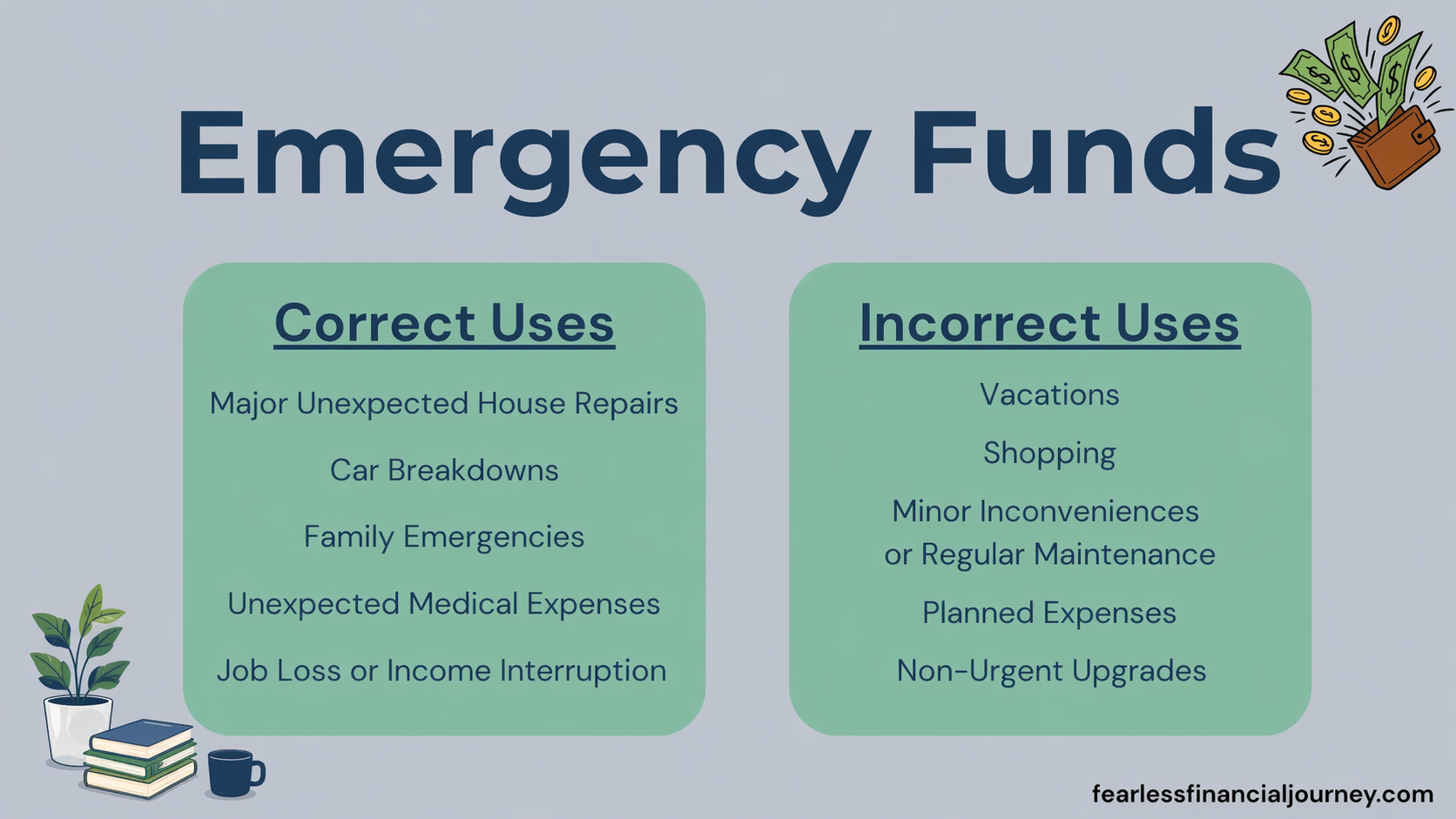
First and foremost, an emergency fund should be a cushion for your unplanned expenses.
If something feels urgent, unexpected, and unavoidable, it’s usually an appropriate time to use your emergency fund.
Think of it as your financial backup plan. It’s there when life doesn’t go according to plan (which, let’s be honest, is normal).
Why Having One Matters
Emergency funds are critical to financial success, protecting you if your income suddenly stops due to job loss, illness, or unexpected life events.
It Keeps You Out of Debt
Without emergency savings, many people rely on credit cards when something goes wrong. That can quickly turn a small problem into long-term debt thanks to high interest. An emergency fund lets you handle surprises with cash instead.
It Reduces Stress
Money stress is real. Knowing you have a cushion set aside makes unexpected expenses much less scary. You may not like emergencies, but we know they’ll happen, and you can be prepared for them. This takes away the panic and stress when one happens.
It Protects Your Future Plans
Dipping into retirement savings or selling investments early can set you back big time. An emergency fund helps you deal with short-term problems without messing up your long-term goals.
It Gives You Options
Whether it’s taking time to find the right job, getting your vehicle repaired, fixing a leaking roof, or handling a family emergency, having savings gives you flexibility. And flexibility equals freedom and peace of mind.
How Much Should You Save?
You’ve probably heard the rule: three to six months of essential expenses. That’s a great goal, but don’t let it scare you off.
If you’re starting out, even $500, $1,000, or one month of expenses is a huge win. The most important thing is to start — you can build it up over time. Usually, people save enough for 3 to 6 months of expenses.
Where Should You Keep It?
Your emergency fund should be:
- Easy to access
- Safe (not invested in long-term assets)
- Separate from your everyday spending
A high-interest savings account usually does the trick for most people. This money isn’t about earning big returns — it’s about being there when you need it.
For example, accounts such as the First Home Savings Account (FHSA) or Registered Retirement Savings Plan (RRSP) are great savings tools, but lack the withdrawal simplicity needed for emergency funds.
How to Build an Emergency Fund Without Feeling Overwhelmed
You don’t need to save it all at once. Try this instead:
- Set up automatic transfers (even small ones)
- Save a little from every paycheck
- Use bonuses or tax refunds to give it a boost
- Treat it like a bill you pay to yourself
Slow and steady absolutely counts.
Final Thoughts
An emergency fund won’t stop unexpected things from happening — but it will stop them from turning into financial disasters.
No matter where you’re starting from, having money set aside for emergencies puts you in control. And that peace of mind? Totally worth it.
References
Eeva Niemi is a Financial Advisor with CI Assante Wealth Management Ltd. The opinions expressed are those of the author and not necessarily those of CI Assante Wealth Management Ltd. The case studies mentioned in this presentation are provided for illustrative purposes only and do not represent an actual client or an actual client’s experience, but rather are meant to provide an example of our process and methodology. The results portrayed are not representative of all of our clients’ experiences. Please contact Eeva at eniemi@assante.com or visit https://advisor.assante.com/Eeva-Niemi to discuss your particular circumstances prior to acting on the information above. CI Assante Wealth Management Ltd. is a Member of the Canadian Investor Protection Fund and the Canadian Investment Regulatory Organization.